

Bail Meaning in Texas: What Families Need to Know After an Arrest in Houston
Your phone rings at 2 a.m. A loved one says, “I’m in jail.” You feel panic, confusion, and fear all at once. Then one question comes out before anything else: “Can they get bail?”
If this is your first time dealing with the system, bail terms can feel unclear and stressful. This guide explains the bail meaning, how bail works in Texas, and what families in Harris County should expect. Bail rules follow patterns, but every case depends on facts and a judge’s decision.
This page shares general information to help families understand the process. A lawyer gives legal advice.
Bail Meaning in Simple Terms
What is bail?
Bail is a court-approved way for a person to leave jail while their criminal case stays open. The court sets conditions, often including money, to make sure the person returns for future court dates.
When people search what is bail or meaning of bail in court, they are usually asking one thing:
“Can my loved one come home while the case moves forward?”
Bail exists to balance two needs. The court wants the person to return to court. Families want the person out of jail before trial.
What bail is not
Bail does not mean the case is over.
It does not mean guilt or innocence.
It is not a fine or punishment.
Bail is about release before trial, not the final outcome.
Bail Definition Texas: What the Law Says
Texas law defines bail as security given by a person accused of a crime so they will appear in court. The court may require money, property, or other conditions to support that promise. This legal meaning comes from the Texas Code of Criminal Procedure, Chapter 17.
In plain language, Texas courts use bail to reduce the risk that someone will miss court while avoiding unnecessary jail time before trial.
If you want the legal wording, you can read it directly in the Texas statutes. Many families also find it helpful to review the internal guide on What Is Bail, which explains Texas bail rules in everyday terms.
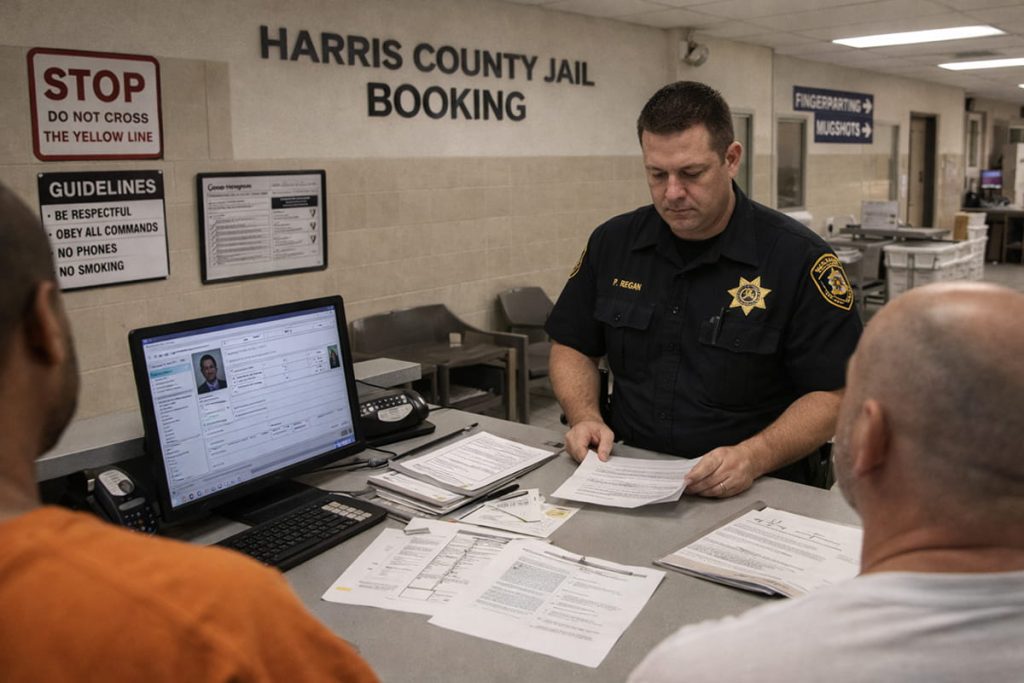
How Bail Works Step by Step in Texas
Arrest and booking
After an arrest, law enforcement takes the person to jail. Jail staff record identifying details, fingerprints, photographs, and the charge. Personal property gets logged for release later.
Magistration and bail setting
A magistrate reviews the charge and sets bail in many cases. Texas law requires this step without unnecessary delay. In Harris County, this often happens within hours, though timing depends on jail volume and case type.
The magistrate decides whether bail applies and, if so, the amount and any conditions.
Posting bail and release
Once bail is posted, jail staff complete release checks. Release time varies based on paperwork, staffing, and whether any holds apply.
Court dates and conditions
After release, the person must attend all court dates and follow any bond conditions. Missing court can lead to serious problems.
For a deeper breakdown, families often read How Does the Bail System Work, which explains each step in more detail.
Bail vs Bond: What People Mean in Real Life
People often use “bail” and “bond” as if they mean the same thing. In practice, they describe different parts of the process.
Bail is the total amount set by the court.
Bond is the method used to satisfy bail and secure release.
Understanding this difference helps families avoid confusion during late-night calls and paperwork.
Types of Bail in Texas
Cash bail
With cash bail, someone pays the full bail amount directly to the court. If the person follows court rules, the court may return the money after the case ends, minus allowed fees.
Cash bail often feels out of reach for families facing high bail amounts.
Surety bond (bail bond)
A surety bond, often called a bail bond, involves a licensed bail bond agency. The family pays a percentage fee to the agency, and the agency guarantees the full bail amount to the court.
This option allows release without paying the full bail up front.
Personal bond (PR bond)
A personal bond, also called a PR bond, allows release based on a written promise to return to court. Courts use PR bonds more often for low-level charges and people with strong community ties.
PR bonds are not guaranteed and depend on the judge and case history.
What Changes the Bail Amount in Texas
Judges do not choose bail numbers at random. Texas law guides bail decisions using specific factors. Families often notice these patterns:
- The charge level, such as misdemeanor or felony
- Prior convictions or open cases
- Prior failures to appear in court
- Ties to the community, including work and housing
- Public safety concerns
Texas law lists these factors in Article 17.15 of the Code of Criminal Procedure. Judges must balance fairness with court appearance risk.
What Happens if Someone Misses Court While on Bail
Missing court creates serious problems fast.
The court may issue a warrant.
The court may begin bond forfeiture.
Collateral tied to the bond may be at risk.
Families should treat court dates as mandatory. Even honest mistakes can cause major setbacks.
Common Bail Questions First-Time Families Ask
What is bail in simple terms?
Bail is a way to leave jail before trial by promising to return to court.
What does bail mean in court?
In court, bail means the conditions set for pretrial release.
What is the difference between bail and a bail bond?
Bail is the amount set. A bail bond is one way to secure release.
Do you get bail money back in Texas?
Cash bail may be returned after the case ends, depending on court rules. Bail bond fees do not return.
Can a lawyer ask the judge to lower bail?
Yes. Lawyers often request bail reductions when facts support it.
How fast can someone get released in Harris County?
Release time depends on bail type, jail workload, and paperwork.
Trusted Resources for Learning More
Families often want neutral sources to confirm what they read. Helpful resources include the Texas Judicial Branch overview of the criminal process and Nolo’s plain-language guide to bail basics. These sources explain bail concepts without sales language.
What to Do Next if Bail Is Set
If bail applies, gather key details right away:
- Full legal name
- Date of birth
- Jail location
- Booking number, if available
- Charge type and bail amount
Having this information ready saves time and reduces stress.
At 24/7 Bail Bonds, our mission is to get your loved one home safely and swiftly. We answer calls 24 hours a day, 365 days a year, because arrests do not follow a schedule. We know the process feels frustrating. Our goal is to make it easier, step by step.
If you have questions about bail meaning in Texas or next steps in Harris County, help is available when you need it most.
