

No Bond Meaning in Texas: Why Judges Deny Bond and What Families Can Do
Your phone rings late at night. A loved one says they are in jail, but something feels different this time. Their voice sounds tense. Then they say, “They told me I have no bond.”
Most families pause right there. You expect to hear a number. Instead, you hear that release is not an option—at least not right now.
This guide explains the no bond meaning, why judges issue denied bond in Texas, and what steps families in Harris County can take next. A “no bond” situation feels overwhelming, but it does not always mean there is no path forward.
This page provides general information to help you understand what is happening. A criminal defense attorney can give advice based on the specific case.
Fast Answer: What Does “No Bond” Mean?
Simple definition of no bond
A no bond status means a judge has decided the person cannot be released from jail by paying bail.
In simple terms, the no bond meaning is this: the court requires the person to remain in custody because it believes release is not appropriate at this stage.
Key points families should understand:
- The defendant must stay in jail
- Bail is not currently available
- A future court hearing may change this
- The case usually involves serious risk factors
When people search “no bond set meaning”, they often confuse it with a temporary delay. In reality, a denied bond Texas situation usually reflects a judge’s decision after reviewing the case.

“No Bond” vs “Bond Not Set” vs “Bond Revoked”
Families often hear similar terms. Each one has a different meaning.
No bond (denied bail)
- A judge has decided not to allow release
- The person must remain in custody
- Often tied to safety or flight risk concerns
Bond not set (temporary status)
- Bail has not been assigned yet
- The judge has not reviewed the case
- Common in the first hours after arrest
Bond revoked
- The person was released but lost their bond
- This often happens after missing court or breaking rules
- The person returns to jail without release
Understanding these differences helps families avoid confusion during a stressful time.
Why Judges Deny Bond in Texas
Public safety is the top concern
Judges must protect the public and the court process when making bail decisions. If the court believes release would create risk, it may deny bail.
Courts consider whether holding someone without bond serves the public interest and ensures safety
Common reasons for denied bond in Texas
Judges may deny bond for several reasons:
- Violent felony charges
- Capital murder or life-sentence cases
- Repeat felony offenses
- Prior failure to appear in court
- Probation or parole violations
- Evidence of witness intimidation
- High risk of fleeing before trial
In these situations, the court believes release could create serious risks.
Charges That Often Lead to No Bond Holds
Some charges carry a higher chance of a no bond decision.
Violent offenses
These cases often involve direct harm or threat to others, such as:
- Assault causing serious injury
- Domestic violence cases
- Robbery or aggravated assault
Capital or life-eligible felonies
These cases carry the most serious penalties:
- Murder charges
- Cases with potential life sentences
Judges often deny bond because the stakes are high and the risk of flight increases.
Repeat offender cases
A history of repeated offenses can influence the court’s decision.
- Prior felony convictions
- Pattern of criminal behavior
Probation or bond violations
Courts take violations seriously.
- New arrest while already on bond
- Failure to follow court conditions
These situations often lead to immediate detention without bond.
What Happens After a No Bond Is Set
The defendant remains in custody
When a judge sets no bond:
- There is no immediate release option
- The person stays in jail while the case moves forward
This can feel sudden and overwhelming for families.
Impact on the case
Being held without bond affects more than just location.
- It becomes harder to work with an attorney
- Stress increases for both the defendant and family
- Jobs and income may be affected
This is why many families act quickly to explore legal options.
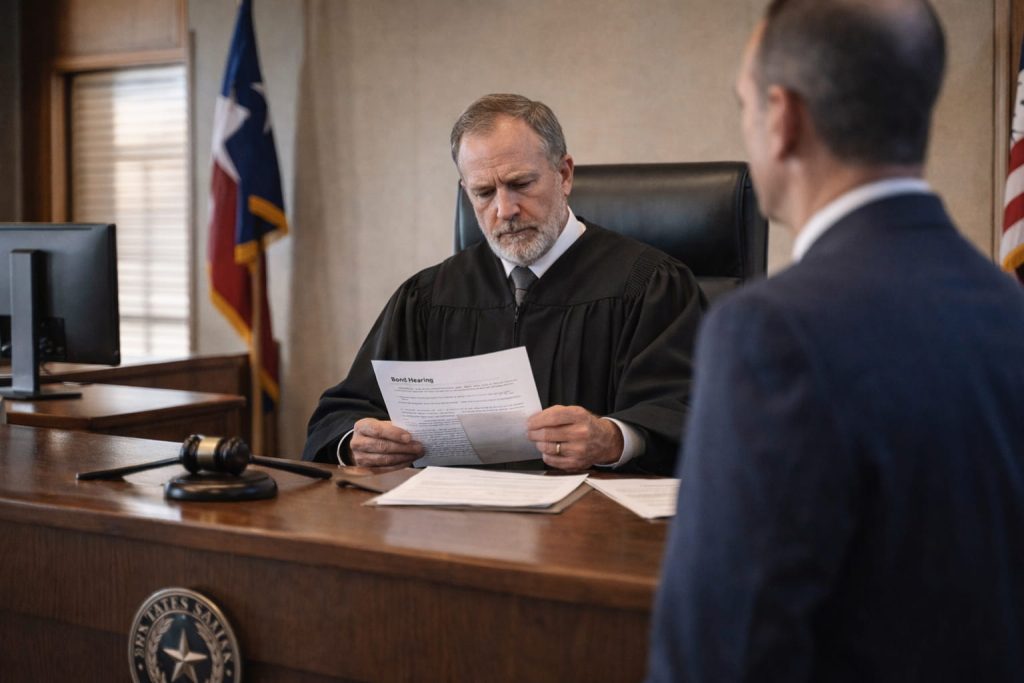
Can a No Bond Be Changed in Texas?
Bond hearings and legal motions
A no bond decision is not always permanent. Attorneys can request a bond hearing and present arguments for release.
Judges have the authority to review the case again and set bail.
When bond may be granted later
Bond may be set after review if:
- New evidence is presented
- Charges are reduced
- Strong community ties are shown
- A defense attorney presents a clear argument
Each case depends on facts and legal strategy.
The 90-Day Rule and Delayed Charges
Texas law limits how long someone can remain in jail without progress on their case.
Under the Texas Code of Criminal Procedure Article 17.151:
The state must move forward within specific timelines.
General guidelines include:
- 90 days for felony cases
- 30 days for certain misdemeanors
- 15 days for lower-level cases
If the state is not ready within these timeframes, the defendant may qualify for release on bond or reduced bail.
What Families Should Do Right Away
A no bond situation requires quick and informed action.
Step 1: Confirm the hold status
First, confirm whether the case is truly no bond or simply bond not set yet.
This detail matters and can change next steps.
Step 2: Contact a criminal defense attorney
Only an attorney can challenge a no bond decision.
An attorney may:
- Request a bond hearing
- Present arguments for release
- Work to reduce charges
Step 3: Prepare for a bond hearing
Families can help by gathering:
- Proof of employment
- Residence information
- Family support details
- Character references
These details help show stability and reduce perceived risk.
How Bail Bonds Fit Into No Bond Cases
When a bondsman can help
A bail bondsman can help once a judge sets bail.
At that point, families can use a bond to secure release without paying the full amount.
Learn more about this process on our page explaining what no bond means and next steps.
When a bondsman cannot help yet
While a no bond hold is active:
- No bail amount exists
- A bondsman cannot post release
Once bail is set, families can explore options like felony bail bonds in Houston.
Emotional Impact on Families
Why “no bond” feels overwhelming
Families often feel:
- A loss of control
- Uncertainty about what happens next
- Fear about serious charges
This moment can feel heavier than a typical arrest.
What families should remember
Even in serious cases:
- A no bond decision can be challenged
- Legal options still exist
- The situation can change with the right steps
You are not without options.
Understanding Bond Status at a Glance
| Status | Meaning | Release Option | Next Step |
| No Bond | Bail denied | None | Request hearing |
| Bond Not Set | Temporary | Pending | Wait for magistrate |
| Bond Set | Bail assigned | Pay or bond | Contact bondsman |
FAQs About No Bond in Texas
What is the meaning of no bond?
A no bond means the judge has denied bail. The person must remain in jail until the court allows release.
Why would someone be unbondable?
A person may be held without bond due to violent charges, repeat offenses, or risk of fleeing.
What does $0 bond mean in Texas?
It often means bail has not been set yet or is temporarily unavailable.
Is no bond permanent?
No. A judge can review and change the decision during a later hearing.
Can a judge change a no bond decision?
Yes. Judges can set bail after reviewing new evidence or arguments.
How long can someone be held without bond?
It depends on the case, but Texas law limits delays under certain conditions.
Can a lawyer get bond set after denial?
Yes. Attorneys can request hearings and argue for bail.
What should I do if my loved one has no bond?
Confirm the status, contact an attorney, and prepare information for a bond hearing.
When you face a no bond situation, speed and clarity matter. At 24/7 Bail Bonds, we help families understand their options and prepare for the next step as soon as bail becomes available.
We are open 24 hours a day, 365 days a year, because urgent situations do not wait.
